
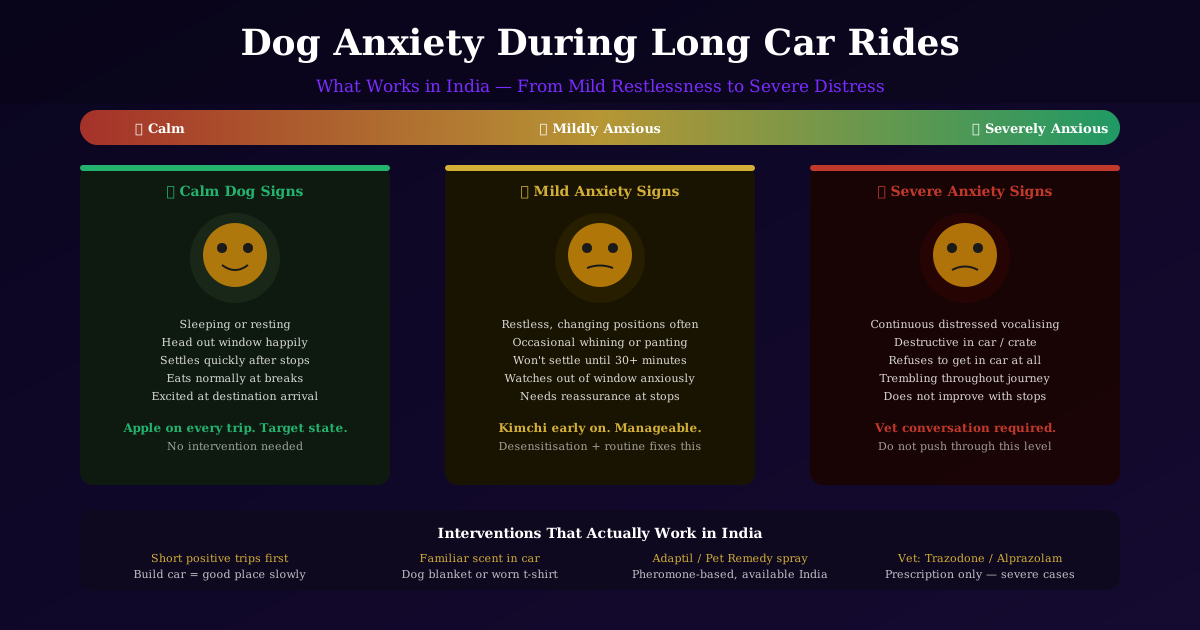
Kimchi was not car sick in the traditional sense. She was anxious. The restlessness, the inability to settle, the whining that started 20 minutes into any drive - it was not nausea. It was anxiety. The distinction matters because the fix is completely different. Car sickness responds to antiemetics. Car anxiety responds to desensitisation, routine, and in some cases, behavioural support from your vet.
This guide covers how to tell the difference, what works for each level of anxiety on Indian road trips, and when the honest answer is "talk to a vet before the next trip."
Car Sickness vs Car Anxiety - How to Tell
Car sickness is vestibular - it comes from the inner ear's inability to reconcile visual information (stationary interior) with movement signals (the car moving). Signs: yawning, drooling, vomiting. Usually starts after 30+ minutes of movement. Worsens on curves and winding roads.
Car anxiety is psychological - the dog associates the car with stress, uncertainty, or a negative past experience. Signs: trembling before the car moves, distress from the moment of entering the car, continuous whining or panting regardless of road quality, refusal to enter the car voluntarily.
Many dogs have both. A dog who was car sick repeatedly will develop car anxiety on top of the physical sensitivity - they learn the car means nausea and start the anxious response before the car even starts moving.
Mild Anxiety - What We Did With Kimchi
Kimchi's anxiety in the first six months responded entirely to desensitisation and routine building. The process:
- Short positive trips first. Before any long trip, she needed to associate the car with good outcomes - a short drive to a park, a treat, something she enjoyed. Three or four of these a week for a month built a positive car association.
- Familiar scent in the car. A blanket that smells like home, or a worn t-shirt from a family member. Familiar scent activates the parasympathetic nervous system and reduces the stress response. Simple and effective.
- Consistent departure routine. Dogs read patterns. A consistent pre-departure routine - same sequence each time - signals that the car experience is predictable and known. Unpredictable departures (rushing, chaos, different times) increase anxiety.
- Her own space. Kimchi settled significantly better once she had a defined spot in the car - a specific bed in a specific position. Dogs who are moved around the car, shifted between seats, or share space inconsistently take longer to settle.
Moderate Anxiety - Pheromone-Based Options
For dogs who need more than routine: Adaptil (DAP - dog appeasing pheromone) spray or diffuser is available in India through veterinary pharmacies and online. Apply to the car interior 15 minutes before departure. It is not sedative - it works by mimicking the pheromone mother dogs produce with puppies, triggering a calming response. It is effective for moderate anxiety cases, and completely safe.
Pet Remedy (available online India) is a plant-based alternative that works similarly. Results vary by dog - some respond strongly, some less so. Worth trying before moving to prescription options.
Severe Anxiety - The Vet Conversation
If your dog shows continuous distressed vocalisation throughout a journey, trembles persistently, is destructive in the car, or refuses to enter the car at all - this is severe anxiety and needs a veterinary conversation before the next long trip. Pushing a severely anxious dog through a 6-hour drive is not building resilience. It is reinforcing the anxiety.
Prescription options your vet may consider: Trazodone (situational anxiolytic, very effective for travel anxiety in dogs, widely used in India) or Alprazolam (shorter-acting, for acute events). Both require a prescription and a vet assessment. Both are safe and effective when used correctly.
Do not source prescription medications without a vet consultation. Dosing is weight-dependent and some dogs have contraindications.
The Longer Term: Building a Better Car Dog
The best investment for any dog who struggles in the car is starting early. A puppy who does short, positive car trips from 8 weeks has a fundamentally different car relationship than a dog whose first car experience was a long, stressful journey. If you have a puppy, prioritise car habituation. If you have an adult dog with established anxiety, the desensitisation process is slower but works with patience.
Three months of consistent work with a mildly anxious dog - short positive trips, routine, familiar scent - will produce a significantly calmer car companion. Two years later, Kimchi sleeps through most of our drives.
Related Guides
- Car Sickness in Dogs India - Causes and Prevention
- How to Travel with Dogs in India by Car
- Night Drives with Dogs in India
- Road Trip with Dogs India - Packing List
- Dog Separation Anxiety in India
Have a Question?
If you have a question about travelling with dogs in India that this guide doesn't answer, submit it here - we add the most common questions to our FAQ sections regularly.
See all our verified pet-friendly places: Explore places →