
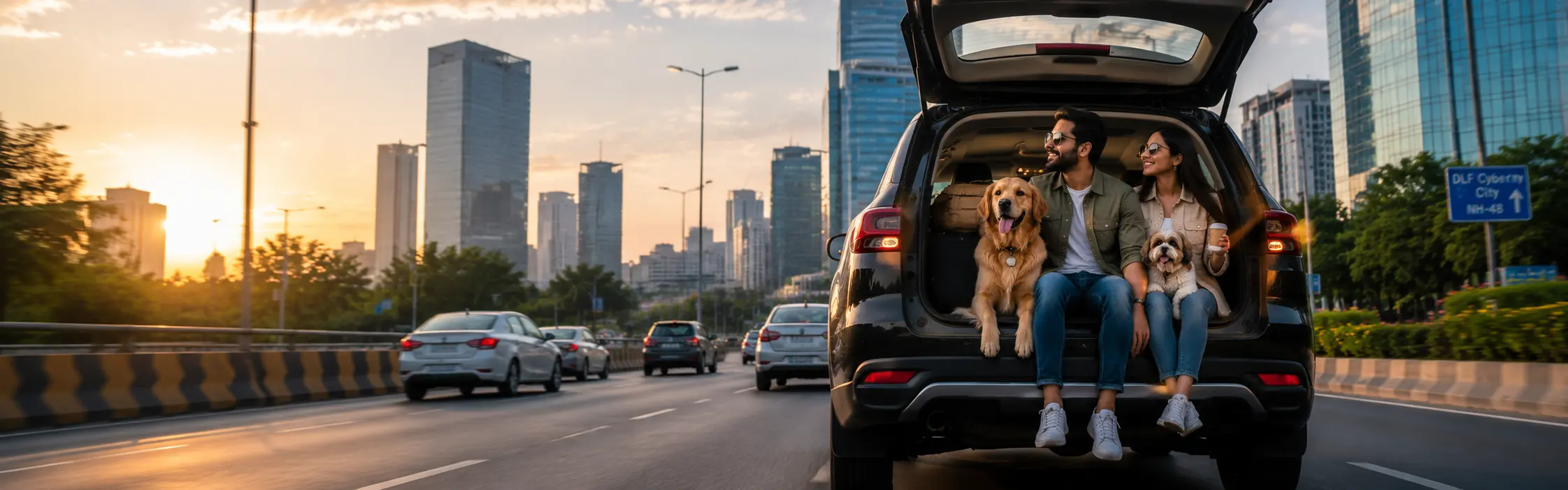
If you have been searching for how to travel with dogs in India by car, you are already thinking like a responsible pet parent. Car travel is the safest, most comfortable, and most dog-friendly way to explore India with your pets. Not just because dogs stay with you in the cabin - but because you control every variable: the stops, the temperature, the timing, and the pace.
We have driven over 40,000 km across India with Apple, Captain and Kimchi in our Jeep Rubicon. This guide is everything we have learned - from the Eastern Peripheral Expressway at midnight to the switchbacks above Chail. Not theory. Real experience.
Before You Leave: The 48-Hour Checklist
Most dog travel mistakes happen in the 48 hours before departure, not on the road. The rush of packing, the excitement of leaving, the assumption that everything will be fine - this is when things get missed.
- Vaccination records photocopied - keep one set in the car, one on your phone.
- Last deworming date checked - if it has been more than 3 months, deworm 10 days before travel.
- Tick prevention applied - apply at least 24 hours before entering any forested or hill area.
- Vet contact saved - know the nearest vet at your destination.
- Food pre-portioned - pack 3 days extra beyond what you think you need.
Setting Up Your Car for Dog Travel
The difference between a calm dog and an anxious dog on a long drive is almost always the car setup. Dogs travel well when they have a defined, comfortable space that feels secure.
For our three dogs - Apple (26 kg), Captain (18 kg) and Kimchi (22 kg) - we use the full boot of our Jeep Rubicon with the rear seats folded. The key rule: never let dogs travel on the front seat or unsecured in the boot of a hatchback.
- A familiar blanket from home reduces anxiety significantly
- One toy or chew they associate with comfort
- Water bowl accessible without stopping
- Ventilation - rear AC or slightly open rear windows
Planning Highway Stops: The Rule of 3 Hours
Never drive more than 3 hours without a dedicated dog stop. Not a quick fuel stop - a 30-minute stop with walking, water, and a pee break.
What makes a good highway dog stop:
- Open grass or dirt area
- Shade available (especially April to June)
- Clean water accessible
- Not near the road edge
Motion Sickness in Dogs: How to Handle It
Some dogs get car sick, especially on hill roads with constant curves. What actually works:
- Light feeding 4 hours before departure
- Stop more frequently on hill sections
- Keep the car at a consistent temperature
- Ginger biscuits as treats on the road
- For severe cases: ask your vet about Cerenia (maropitant)
Night Drives with Dogs: Why We Prefer Them
For routes above 250 km, we almost always drive at night. The logic is simple: cooler air, dramatically less traffic, and dogs who are naturally in their sleep cycle and stay calm.
Hill Roads: Special Considerations
Mountain roads change the game completely. Slower speeds, sharper turns, fewer stops available, and altitude affecting some dogs. Some dogs experience mild altitude sickness above 2,000 metres - slightly laboured breathing, reduced appetite. It usually resolves in 24 hours.
Handling Emergencies on the Road
- Basic first aid kit in the car always: bandages, antiseptic, tick remover, saline solution, gloves
- Nearest 24-hour vet location known before the drive
- Your dog's regular vet reachable by WhatsApp
- Dog identity tag on collar with your phone number
The Short Version
- Car is the best way to travel with dogs in India
- Stop every 3 hours for walking, water and food
- Night drives work extremely well for long routes
- Prepare your car: flat space, familiar blanket, water access
- Have vaccination certificate, vet contact, and first aid kit
- Book and confirm stays before you leave - never assume