
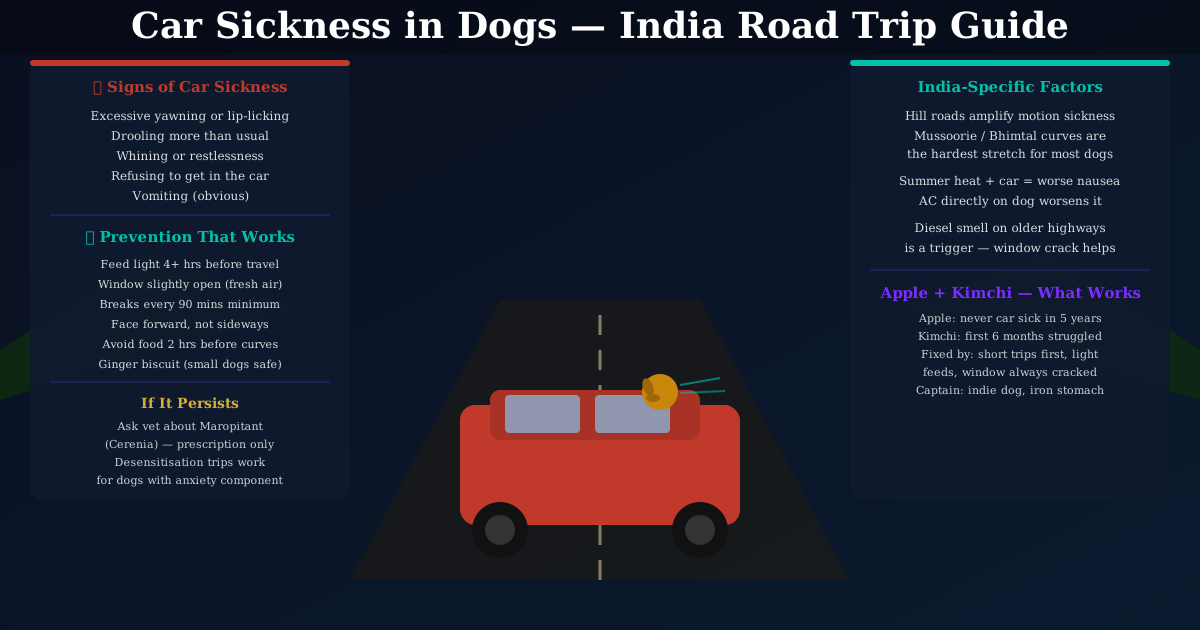
Kimchi was car sick for the first six months we travelled with her. Apple has never been car sick in five years. Captain, our Indie dog, has the constitution of a freight truck. Three dogs, three completely different car experiences - and everything we learned about fixing the problem for Kimchi applies directly to most dogs who struggle on Indian road trips.
This guide covers the signs of car sickness in dogs, the India-specific factors that make it worse, the prevention methods that actually work, and when medication becomes the right conversation to have with your vet.
Signs Your Dog Has Car Sickness
Car sickness in dogs does not always mean vomiting. The earlier signs - which most pet parents miss - come well before that:
- Excessive yawning, especially repetitive yawning on a drive that would not normally make them tired
- Lip licking or excessive salivation - drooling significantly more than usual
- Restlessness - unable to settle in one position, moving around the car continuously
- Whining or vocalising without an obvious reason
- Refusing to get into the car, or showing anxiety when you approach the car
- Vomiting - the obvious endpoint, but you want to catch it before this
If your dog shows the first three signs consistently on drives over 30 minutes, address it before the next long trip.
India-Specific Factors That Make It Worse
Hill roads. The winding curves on the approach to Mussoorie, Bhimtal, Coorg, Ooty, and virtually every hill station in India are the hardest stretch for dogs with any motion sickness tendency. The constant lateral movement is significantly worse than straight highway driving. If your dog is fine on NH9 but struggles on the Bhimtal approach, the curves are the cause.
Summer heat. A hot car amplifies nausea. A dog who is mildly susceptible in October may be significantly worse in May. AC pointed directly at a dog can also trigger or worsen nausea - the temperature differential between the dog and the surrounding air is disorienting for their vestibular system. Aim for even, cool air rather than a cold direct blast.
Diesel fumes. On older highways and behind heavy trucks, diesel smell is a genuine trigger for some dogs. A slightly open window provides fresh air reference and reduces the diesel concentration inside the car. This one simple thing fixed about 40% of Kimchi's problem.
Feeding timing. Indian road trips often involve leaving at 11 PM or 1 AM after a normal evening meal. A dog who ate at 8 PM and is in a moving car by midnight has a full stomach on a night drive - worse conditions than a light meal earlier in the day.
Prevention That Works
Feed light, 4+ hours before travel. A small meal rather than a full one. No food in the 2 hours before a stretch of curves. This one change alone significantly reduces incidence.
Window slightly open. Fresh air reference helps the vestibular system. Not wide open - a crack at the top is enough. The goal is fresh air without the wind stress of a fully open window.
Breaks every 90 minutes. A dog who stretches, sniffs, and resets every 90 minutes is a significantly more settled car passenger than one who sits for 5 hours. The verified stops on the Delhi to Jim Corbett route and the Delhi to Rishikesh route are specifically spaced for this.
Face forward. Dogs who can look forward through the windscreen have significantly fewer car sickness issues than dogs who face sideways or backward. If your dog's travel crate faces sideways, reposition it. If they sit on the back seat, let them look between the front seats toward the windscreen.
Desensitisation for anxious dogs. Some car sickness is anxiety-driven rather than purely vestibular. Short positive-association trips - to a park, to a treat, somewhere they enjoy - build positive car associations over weeks. Kimchi's improvement was partly this.
When to Talk to Your Vet
If prevention measures do not resolve it, ask your vet about Maropitant (brand name Cerenia in India). It is a prescription antiemetic specifically effective for motion sickness in dogs. It is safe, widely used, and dramatically effective for dogs with genuine vestibular car sickness. Do not give human travel sickness medication to dogs - the active ingredients are different and some are unsafe for dogs.
Related Guides
- How to Travel with Dogs in India by Car - Complete Guide
- Road Trip with Dogs India - Packing List
- Dog Anxiety During Long Car Rides India
- Night Drives with Dogs in India
- Dog Paw Care on Road Trips
Have a Question?
If you have a question about travelling with dogs in India that this guide doesn't answer, submit it here - we add the most common questions to our FAQ sections regularly.
See all our verified pet-friendly places: Explore places →