
Paw injuries are the most common minor medical issue we deal with when travelling with Apple, Captain, Rustie, and Kimchi. Not because India is particularly dangerous - but because road trips involve four terrain types that each carry specific paw risks, and most pet parents are not checking paws after each terrain change.
This guide covers each terrain type, what to look for, what to pack, and how to handle the most common paw issues you will encounter on North Indian road trips.
Rocky Terrain - Aravalli Hills, Bhimtal, Corbett River Banks
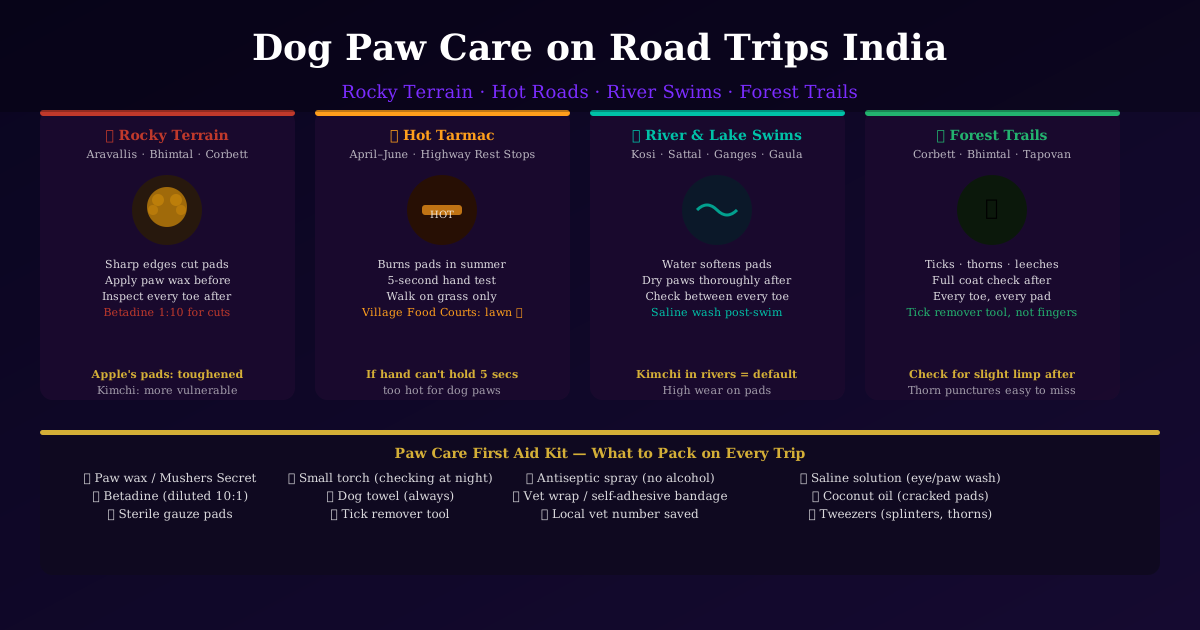
Sharp rock edges cut paw pads. The rocks at Panikot Lake in the Aravallis, the boulders on the Kosi River banks, and the terrain around Sattal Lake are all beautiful but genuinely abrasive on paw pads. Apple's pads are toughened from years of travel. Kimchi's, being younger, are more vulnerable.
Apply paw wax (Mushers Secret works, available online in India) before rocky terrain sessions. After the session, inspect every pad and between every toe under good light. A small cut on a pad that is left untreated becomes infected quickly in warm, wet conditions - especially after river swimming. Clean with diluted Betadine (1 part Betadine, 10 parts water), dry thoroughly, and monitor.
Hot Tarmac - April to June Especially
Indian summer tarmac reaches temperatures that cause genuine burns on paw pads. The 5-second rule: put your own hand flat on the tarmac. If you cannot hold it there for 5 seconds comfortably, it is too hot for your dog's paws. This is not dramatic - it is a real threshold.
Highway rest stops in summer mean dogs should be walked only on grass or in shade. Village Food Courts on the EPE has a green lawn specifically for this reason - it is the only roadside stop on the Delhi-Corbett highway with actual grass. In summer, this detail is not a convenience, it is a health consideration.
River and Lake Swims - Kosi, Sattal, Ganges
Prolonged water exposure softens paw pads. Soft pads on rocky riverbeds - like the Gaula River or the Kosi - get damaged more easily than dry, toughened pads. After any extended swim, dry paws thoroughly with a towel (bring one specifically for paws, separate from the body towel), check between toes for cuts or embedded material, and let pads dry completely before the next walk on hard ground.
River rocks under water look smooth - they are not. The wet surface is slippery and the hidden edges are sharp. Dogs who are moving fast in and out of rivers (Kimchi's default mode) take more wear on pads than dogs who wade carefully.
Forest Trails - Corbett, Bhimtal Above Town, Tapovan
Forest trails carry ticks, thorns, and in monsoon season, leeches. After any forest trail: full coat check with hands going against the grain of the fur, and a focused paw inspection - between every toe, around the paw pads, and up the ankle area where ticks commonly embed. Use a tick remover tool rather than fingers if you find an embedded tick.
Thorn punctures in paw pads are easy to miss because dogs often do not react immediately. Check for a slight limp after a forest trail and inspect the relevant paw carefully if you see one.
The Paw Care Kit - Everything to Pack
- Paw wax (Mushers Secret or equivalent) - apply before rocky or hot terrain
- Betadine - for cleaning cuts; always dilute 10:1 with water
- Sterile gauze pads and vet wrap - for bandaging if needed
- Dog towel - dedicated paw-drying towel, separate from body
- Tick remover tool - flat-edged plastic tool, safer than fingers or tweezers
- Small torch - for inspecting between toes at night
- Coconut oil - for cracked or dry pads after multiple terrain days
- Saline solution - gentle paw wash after river/lake swims
- Local vet number saved in your phone - before you leave, find the nearest vet to your destination and save the number
Related Guides
- Road Trip with Dogs India - Complete Packing List
- Car Sickness in Dogs India
- Tick Fever in Dogs India - Symptoms and Treatment
- First Aid for Dogs on Road Trips
- Delhi to Bhimtal with Dogs - Rocky Terrain Route
Have a Question?
If you have a question about travelling with dogs in India that this guide doesn't answer, submit it here - we add the most common questions to our FAQ sections regularly.
See all our verified pet-friendly places: Explore places →