
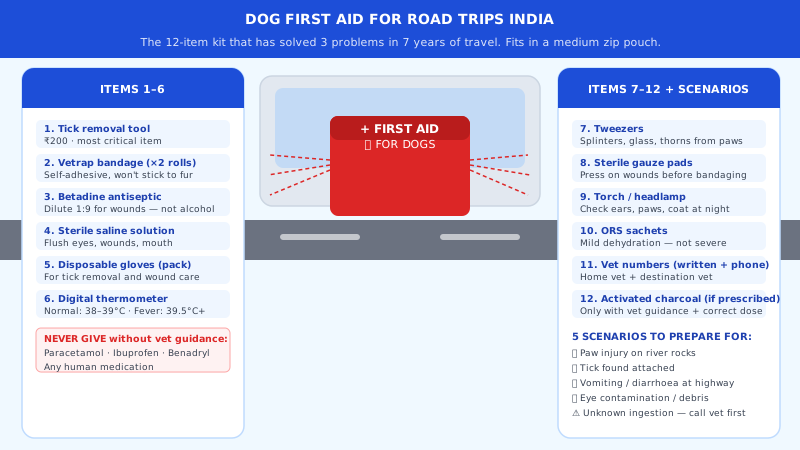
We have needed the dog first aid kit in the car three times in seven years of road trips. Once for a paw cut on river rocks at Kosi. Once when Captain ate something questionable at a highway stop. Once for a tick found on Kimchi's ear that needed careful removal at 1 AM. None became emergencies. All three would have been significantly more stressful without basic supplies.
A dog first aid kit for travel does not need to be elaborate. It needs to cover the realistic scenarios - not the comprehensive trauma kit that sits in the boot and weighs 3 kg. This is the kit we carry: everything fits in a medium zip pouch that takes up no meaningful space.
The 12-Item Car Kit
1. Tick removal tool (₹200)
A purpose-designed hook that removes ticks cleanly without crushing or leaving the head embedded. More important than anything else in this list if you travel to forest or hill areas.
2. Vetrap self-adhesive bandage (₹80–120 per roll)
Sticks to itself, not to fur. Used for wrapping paw injuries, securing wound dressings, or providing light support. Keep 2 rolls in 2-inch width.
3. Betadine antiseptic solution (₹60–80)
Diluted Betadine (10% diluted to 1%) is the standard wound rinse. Clean cuts, scrapes, and bites. Do not use alcohol or hydrogen peroxide on wounds.
4. Saline solution (₹50 per bottle)
For flushing eyes, cleaning wounds, or flushing the mouth.
5. Disposable gloves (₹30 for a pack)
For any wound care, tick removal, or contact with bodily fluids.
6. Digital thermometer (₹200–400)
Rectal temperature is the most reliable way to confirm fever or hypothermia. Normal range: 38–39°C.
7. Tweezers (₹80–100)
For removing splinters, glass fragments, or thorns embedded in paw pads.
8. Sterile gauze pads (₹50 for a pack)
For pressing on bleeding wounds, covering injuries before bandaging.
9. Small torch/flashlight (₹150–300)
For examining ears, throat, paw pads, and finding ticks in coat at night.
10. Oral rehydration salts (₹10–20 per sachet)
For mild dehydration from diarrhoea or vomiting during travel.
11. Your vet's number + nearest destination vet number
Saved as contacts AND written on paper in the kit.
12. Activated charcoal (vet-grade, if prescribed)
Only include this if your vet has specifically recommended it.
The 5 Scenarios You Need to Be Ready For
1. Paw Injury
Sharp rocks at rivers, glass on highways, hot pavement, splinters at forest trails. Rinse with saline, apply diluted Betadine, cover with gauze, secure with Vetrap. If deep or bleeding heavily, drive to vet.
2. Tick Found Attached
Use the tick removal tool. Grip as close to skin as possible. Pull straight out - do not twist. Disinfect the bite site. Monitor temperature daily for 14 days.
3. Vomiting or Diarrhoea at a Highway Stop
Single episode without blood: offer small amounts of water, skip the next meal, monitor. If vomiting is repeated, bloody, or accompanied by extreme lethargy, drive to nearest vet.
4. Eye Injury
Flush immediately with saline solution. Do not rub the eye. If the dog is squinting, pawing at the eye, or the eye appears cloudy/red, see a vet.
5. Unknown Ingestion
Call your vet immediately. Do not induce vomiting unless specifically instructed by a vet.
What Not to Give Dogs Without Vet Guidance
- Paracetamol (Crocin, Calpol): Toxic to dogs
- Ibuprofen: Toxic to dogs
- Benadryl: Human formulation may contain xylitol or other ingredients harmful to dogs
- Any human medication unless specifically prescribed by a vet for your dog
Related: Road trip packing list | Tick fever guide | Heat stroke guide
Have a Question?
If you have a question about travelling with dogs in India that this guide does not answer, submit it here - we add the most common questions to our FAQ sections regularly.
See all our verified pet-friendly places: Explore places →