
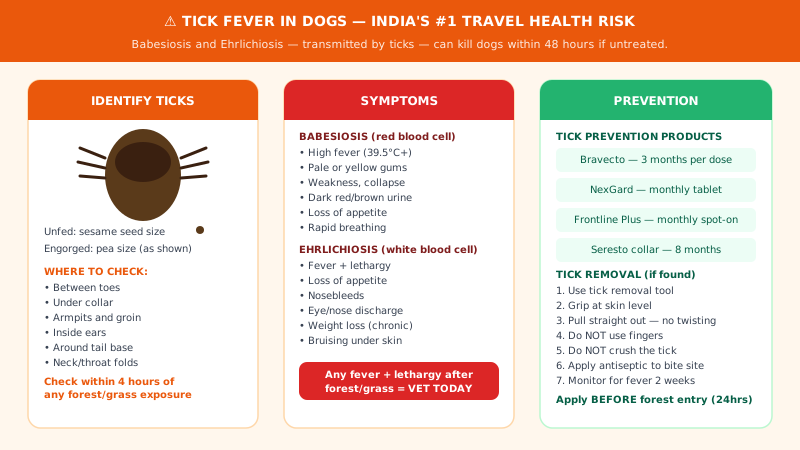
We nearly lost a dog to tick fever. Not our own - a friend's two-year-old Labrador who had spent a weekend at a farm property outside Bengaluru. By the time they noticed something was wrong, he had been feverish for two days. By the time they reached a vet who knew what they were looking at, he was in critical condition. He survived. Many dogs do not.
Tick fever is the most common serious illness in travelling Indian dogs. It kills faster than most pet parents realise, and its early symptoms look like dozens of less dangerous conditions - which is why it is so consistently underdiagnosed until it is severe.
What Is Tick Fever: Two Diseases, One Culprit
"Tick fever" in India refers to two primary tick-borne diseases: Babesiosis (caused by the parasite Babesia canis, transmitted by the brown dog tick Rhipicephalus sanguineus) and Ehrlichiosis (caused by Ehrlichia canis, transmitted by the same tick).
Both are transmitted when a tick feeds on your dog's blood, typically after being attached for 24–48 hours. This is why regular tick checks and fast removal matter so much - a tick that has been on a dog for under 24 hours has a much lower transmission probability.
Babesiosis
Babesia parasites infect and destroy red blood cells. The result is haemolytic anaemia - the body is breaking down its own blood faster than it can produce new cells. A dog can go from apparently healthy to critical in 48 hours.
Specific symptoms to watch for:
- High fever (39.5°C and above - normal is 38–39°C)
- Pale, white, or yellow-tinged gums (this is the most diagnostic visible sign)
- Dark red, brown, or orange-coloured urine - this is haemoglobin from destroyed red blood cells and means the disease is serious
- Severe weakness - a dog that cannot stand or walks with stumbling
- Rapid, laboured breathing
- Loss of appetite and complete disinterest in surroundings
Ehrlichiosis
Ehrlichia attacks white blood cells - the immune system. The acute phase mimics a bad flu. The chronic phase, if untreated, can cause permanent damage to the bone marrow and organs.
Symptoms:
- Fever, lethargy, loss of appetite (acute phase)
- Nosebleeds or bleeding from gums
- Eye and nose discharge
- Swollen lymph nodes
- Bruising under the skin (petechiae)
- Chronic: weight loss, pale gums, difficulty breathing
When to Suspect Tick Fever
Any of these combinations warrants immediate vet attention:
- Fever + lethargy + the dog was in any grassy, forested, or outdoor area in the past 2–3 weeks
- Pale gums + weakness - go to a vet immediately, do not wait
- Dark urine - this is a medical emergency
- Nosebleed in a dog that has recently been outdoors
Tell the vet specifically: "I am concerned about tick fever - Babesiosis or Ehrlichiosis." Many generalist vets in India will do a blood smear and CBC (Complete Blood Count) which shows the characteristic changes. Some areas have rapid IDEXX snap tests that detect both conditions in minutes.
Treatment
Babesiosis: Imizol (diminazene aceturate) injection - usually two doses 24 hours apart. Severely anaemic dogs may need blood transfusion. Supportive care: IV fluids, liver protection medication.
Ehrlichiosis: Doxycycline for 28 days minimum. Shorter courses lead to relapse. This is important - many vets prescribe 7 or 14 days and the dog appears to recover but the infection is suppressed, not cleared.
Recovery time: 2–4 weeks for Babesiosis. 4–8 weeks for severe Ehrlichiosis. Some dogs have lasting immune system changes and need annual blood work to monitor.
Prevention: The Only Rational Approach
Tick fever is almost entirely preventable. The prevention protocol is simple:
- Apply tick prevention product consistently - Bravecto (3-month tablet), NexGard (monthly), Frontline Plus (monthly spot-on), or Seresto collar (8 months). If you travel frequently to forest or hill areas, a chewable tablet is more reliable than spot-on (rivers, swimming, rain reduce spot-on effectiveness).
- Apply/give 24 hours before any forest or grass exposure - not the morning of.
- Do a full-body tick check after every outdoor exposure - check between toes, in ears, under the collar, in armpits and groin, around the tail base. Check within 4 hours of exposure.
- Remove ticks correctly - use a tick removal tool (₹200 at any pet store). Grip at skin level, pull straight out. Do not twist, crush, or use petroleum jelly. Crushing an attached tick can inject infected fluid into the wound.
High-Risk Areas in India
Tick burden is highest in:
- Himalayan foothills - Jim Corbett, Rishikesh, Lansdowne, Kasauli, Dharamshala
- Western Ghats - Coorg, Ooty, Munnar, Wayanad
- Forest-adjacent areas - any wildlife sanctuary or national park boundary
- Agricultural areas - fields, farms, and rural properties across India
- Riverbanks with tall grass - riverside resorts and camping areas
Urban parks in major cities have lower tick burden but are not zero-risk, particularly in monsoon and post-monsoon months when tall grass is present.
Related: Dog vaccination schedule India | Pre-travel health checklist | Car travel with dogs India
Have a Question?
If you have a question about travelling with dogs in India that this guide does not answer, submit it here - we add the most common questions to our FAQ sections regularly.
See all our verified pet-friendly places: Explore places →