
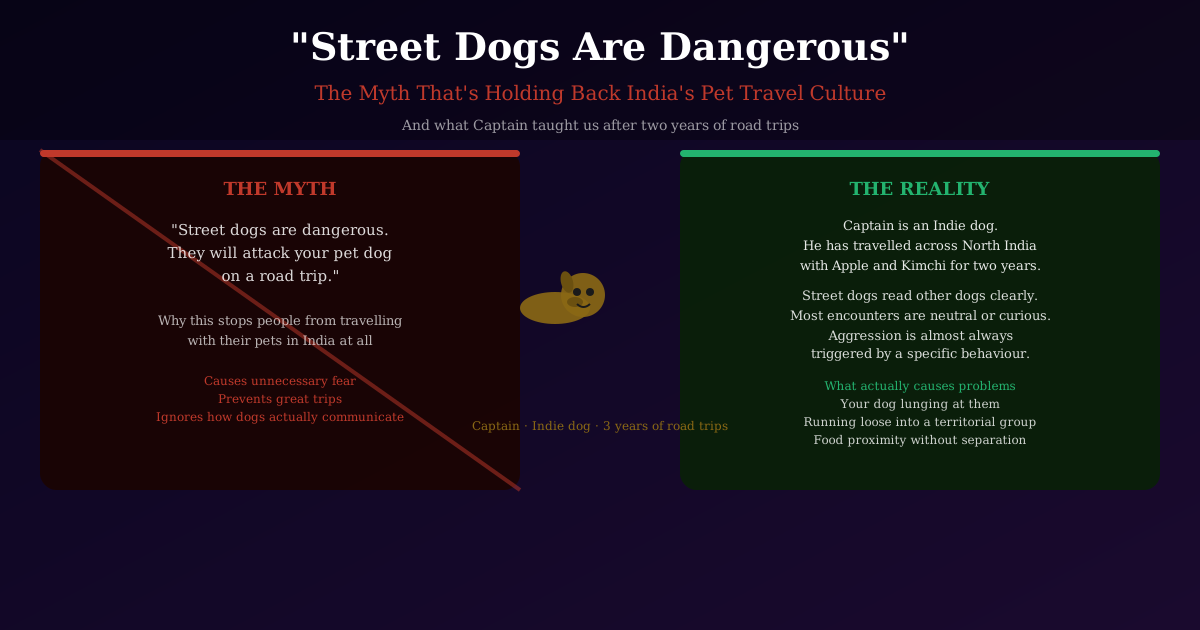
Captain is an Indie dog. We adopted him off the street. He has now spent two years travelling across North India with Apple (a Golden Retriever) and Kimchi (a Black Retriever), staying at highway dhabas, forest resorts, Ganges-side hostels, and mountain lake spots. In that time, we have had precisely two tense encounters with street dogs. Both were avoidable. Neither resulted in a fight.
The myth that street dogs are dangerous - that they will attack your pet dog if you travel through India - stops real trips from happening. This guide addresses it directly, from experience.
What the Myth Gets Wrong
The myth treats all street dogs as a single category behaving the same way. They are not. Street dogs in India are individuals with distinct personalities, territories, and social dynamics - exactly like any dog. What they are particularly good at is reading other dogs accurately and communicating clearly.
A street dog who encounters a new dog almost always goes through the same sequence: assess from a distance, approach if curious, sniff if allowed, and either disengage or establish whether the new dog is a threat to their territory. This is standard dog communication. Most encounters that do not involve a trigger end neutrally.
What Actually Causes Problems
In two years of road trips, every tense encounter we have had with street dogs was caused by one of three things:
A leashed dog lunging at a street dog. A leashed dog who pulls toward street dogs and shows aggressive or highly excited energy will be read as a challenge. Street dogs respond to challenges. The leash prevents the normal nose-to-nose communication that would otherwise resolve the encounter quickly. A calm, leashed dog who is allowed to sniff briefly almost never creates a problem.
Running off-leash into a territorial group near their food source. Street dogs in India are highly territorial around food - a dhaba, a rubbish pile, a feeding spot. A dog running loose and entering this zone off-leash, especially at night, is entering what the street dogs read as a direct resource challenge. This is avoidable by keeping dogs leashed near food areas and dhabas, even at night rest stops.
Food proximity without management. Eating at a dhaba with your dog loose and a street dog nearby who smells food creates resource competition. The fix is simple: keep your dog on leash while eating, do not allow the street dog to approach, and move on. Captain has eaten at hundreds of dhabas. We have never had a problem when food and leashes are managed together.
What Captain Taught Us
Captain, being an Indie dog himself, speaks the same language as street dogs. He approaches them the right way - sideways, not head-on. He signals non-aggression through body language that domesticated breeds often do not use correctly. He reads when a street dog wants space and gives it. He has been an extraordinary travel companion partly because of this fluency.
This does not mean every Indie dog makes a perfect travel companion and every bred dog is a liability with street dogs. It means that reading the situation correctly - keeping your dog calm, managing food, using leashes near territorial areas - is the variable that determines almost every outcome. Not the breed of the street dog you encounter.
Practical Management on Road Trips
- Leash near dhabas and food areas, always. Even at 3 AM when nobody else is around. Street dogs near food sources are at their most territorial.
- Do not let your dog approach street dogs head-on. If your dog is interested, allow a brief sideways approach from a distance and watch the body language of the street dog. If the street dog stiffens or stares directly, move your dog away calmly.
- Keep your own energy calm. Dogs read owner anxiety and amplify it. If you approach a street dog encounter with tension and quick movements, your dog becomes tense. A calm owner produces a calmer dog.
- At highway stops at night: Walk your dog on a short leash around the periphery of the stop, not through the centre where street dogs congregate. The verified stops - Village Food Courts, Kundan's - have managed space where this is straightforward.
The Bigger Picture
India has approximately 60 million street dogs. They are part of the landscape of every road trip, every hill station, every highway stop. The pet parents who travel most successfully with their dogs in India are not the ones who avoid all street dog contact - they are the ones who understand how dog communication works and manage encounters rather than fearing them.
Captain has met hundreds of street dogs. He has made a few friends. He has given a few wide berths. He has had two tense moments that we handled and moved on from. The idea that this makes road trips unsafe is simply not what the data of two years of travel shows.
Related Reading
- Indie Dogs vs Breed Dogs in India - The Honest Comparison
- Adopting a Street Dog in India - What We Wish Someone Had Told Us
- How to Travel with Dogs in India by Car
- 7 Things People Get Wrong About Travelling with Dogs in India
Have a Question?
If you have a question about travelling with dogs in India that this guide doesn't answer, submit it here - we add the most common questions to our FAQ sections regularly.
See all our verified pet-friendly places: Explore places →